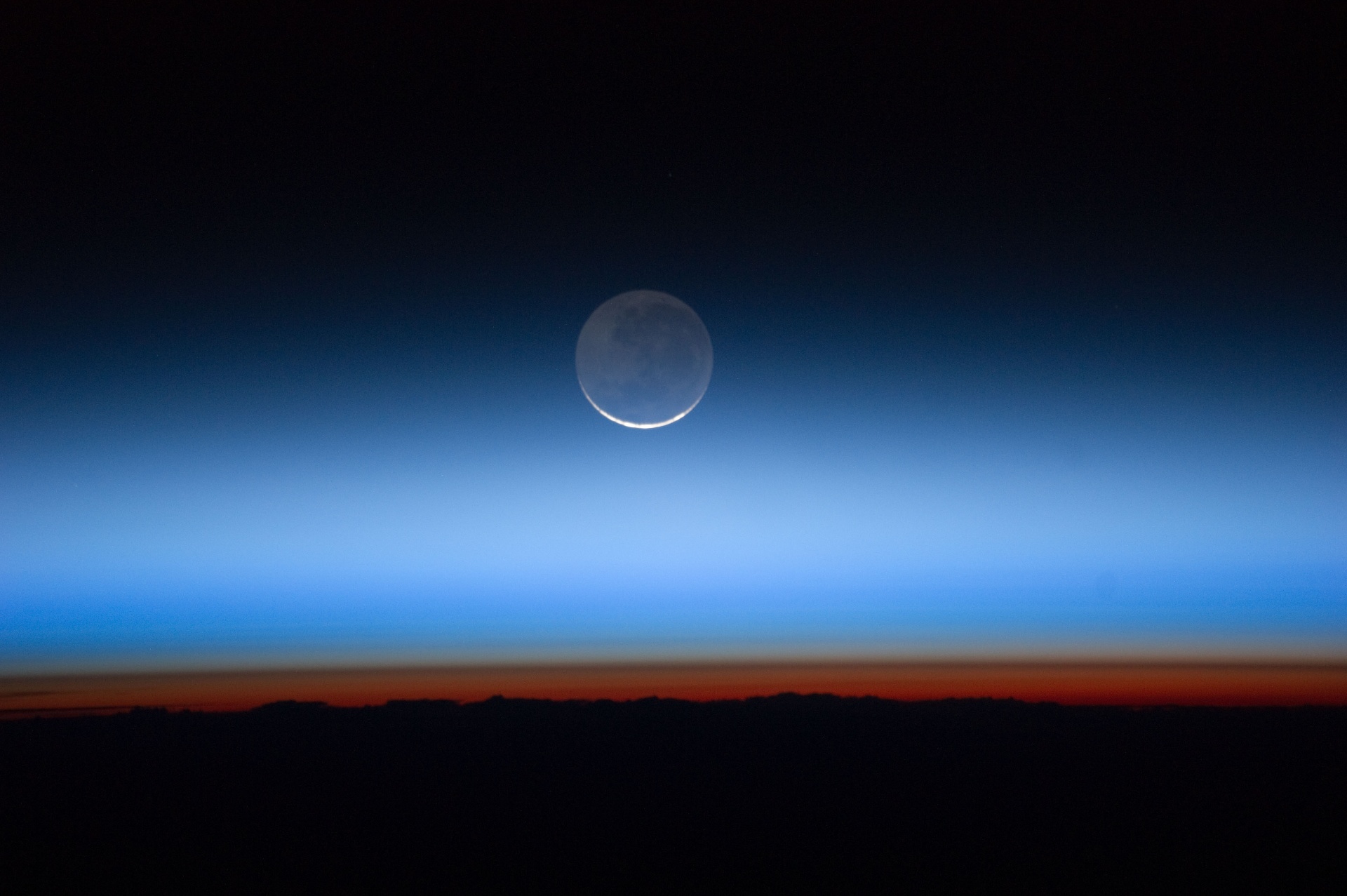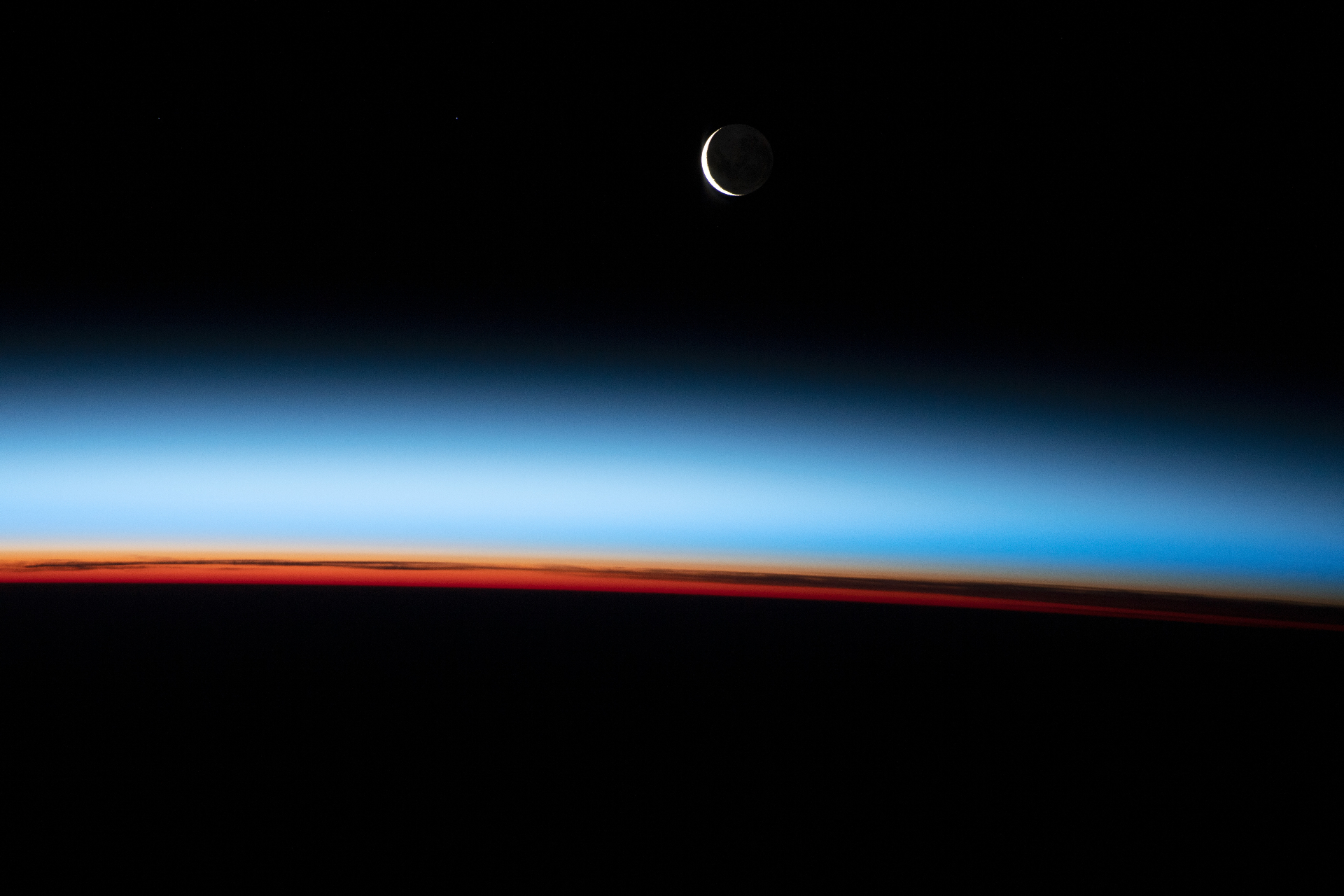
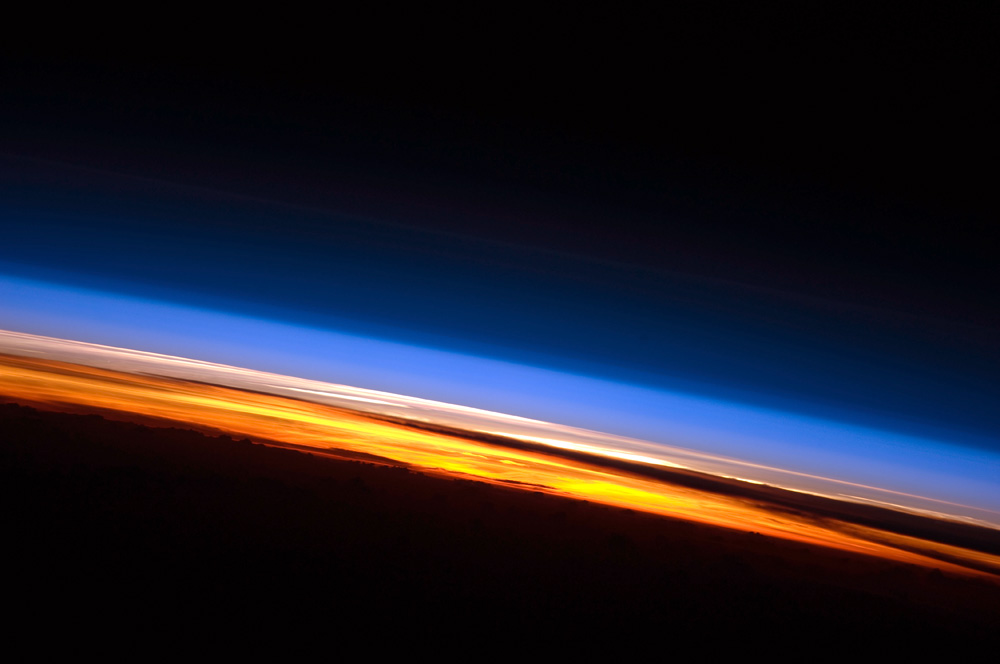
The iconic film director Alfred Hitchcock once said his idea of perfection was a "clear horizon." He meant it metaphorically but I always remembered the quote, sitting oceanside with a cloudless sky and calm sea. For me that perfection was the horizon where the ocean meets the sky, though even as one says it, the phrase feels imprecise. For there is no true meeting there, no seam where water ends and air begins. There is only a soft convergence, a shifting band of light where blue dissolves into blue. From this place, the land at my back, the sea before me, and the sky above seem less like separate realms than parts of a single, continuous world.
Astronaut, aquanaut and artist Nicole Stott reflected on it in her book, Back to Earth.
"From space, you see this incredibly thin line of blue that wraps around our planet. It's so thin that it's almost unbelievable that everything we need to live is contained within it. That line is our atmosphere, but it also represents so much more. It holds the air we breathe, the water that cycles through our oceans and clouds, and the delicate balance that makes life possible. Looking at it, you realize how interconnected everything is. The oceans, the land, the air, they're not separate systems. They're all part of this one, fragile layer that sustains us."
It is from such a perspective that one begins to understand the Earth not as a map, or a system of coordinates, but as a continuity.
We have been taught to divide the world. The ocean is something we cross, the sky something we look through, space something we reach toward. Yet these divisions are conveniences of language, not of nature. The ocean does not end at the shore, it becomes vapor, rises, drifts, condenses, and returns. The sky does not end at the cloud tops, it thins gradually, molecule by molecule, into the darkness we call space. There is no sharp boundary anywhere in this ascent, only a gradient, a thinning, a fading, a continuous transformation.
“The boundaries we draw—between ocean and sky, Earth and space, self and world—are not fixed lines, but conveniences of thought.”
Seen from a distance, as Carl Sagan reminded us, the Earth is a pale blue dot. The blue is not merely the reflection of sunlight off water and air. It is the visible sign that the Earth possesses a coupled system of ocean and atmosphere, circulating energy and matter in a ceaseless exchange, sustaining life across scales both vast and minute.
Remove that system, and the planet would still be here. The mountains would stand, the continents would drift, the iron core would turn. But it would be a silent geology, like Mars or the Moon, a world of rock without respiration.
What distinguishes Earth is not its solidity, but its skin. And that skin is astonishingly thin. The deepest parts of the ocean descend some seven miles. The atmosphere, though it feels boundless to us, contains most of its mass within the first six or nine miles above the surface. Against the Earth's radius of about four thousand miles, this is scarcely a film . If the planet were reduced to the size of an apple, the entire domain of life would occupy less thickness than its peel. Yet within that peel, everything happens.